Chapter VII · Pan-Africanism, unity and legacy
A nation’s
unfinished idea
Lumumba governed for less than three months. His idea of the Congo — one country, master of its own wealth, part of a free Africa — has outlived every regime that followed.
- 01
Congolese national identity
- He was the first Congolese politician to build a party that recruited in every province and spoke for the country as a whole.
- He opposed both the ethnic federalism of his rivals and the secessions of Katanga and South Kasai, insisting on one Congo.
- His idea of sovereignty extended to the economy: the Congo’s land and mineral wealth should serve the Congolese.
- 02
Pan-Africanism
- Accra in 1958 made him part of a continental movement; Kwame Nkrumah became an ally and adviser, and Ghanaian troops served in the UN force.
- In August 1960 he hosted ministers of independent African states in Léopoldville, presenting the Congo’s fight as Africa’s.
- His death split and radicalised the continent’s leaders, and shaped the debates that led to the Organisation of African Unity in 1963.
- 03
Global influence
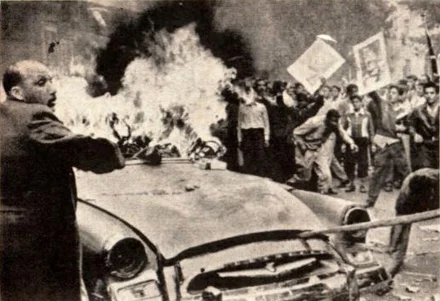
- In February 1961 protests broke out across the world — in Cairo, Belgrade and London among many cities — and in the UN Security Council gallery in New York.
- Malcolm X called him ‘the greatest black man who ever walked the African continent’; he became a figure of the Black freedom movement in the United States.
- His fate remains a reference in arguments about foreign intervention, covert action and who controls Africa’s natural resources.
Remembrance
How he is remembered
National hero
In 1966 — six years after independence — Mobutu, who had played a decisive part in his downfall, proclaimed Lumumba a national hero.
Kinshasa
A monumental statue stands at the Échangeur de Limete, near the mausoleum where his tooth was laid in 2022. Boulevard Lumumba crosses the capital.
Streets and institutions
Streets and squares bear his name from Dar es Salaam and Kampala to Bamako, Charleroi, Tehran and Dresden; Moscow’s Peoples’ Friendship University carried his name from 1961 to 1992 and again from 2023.
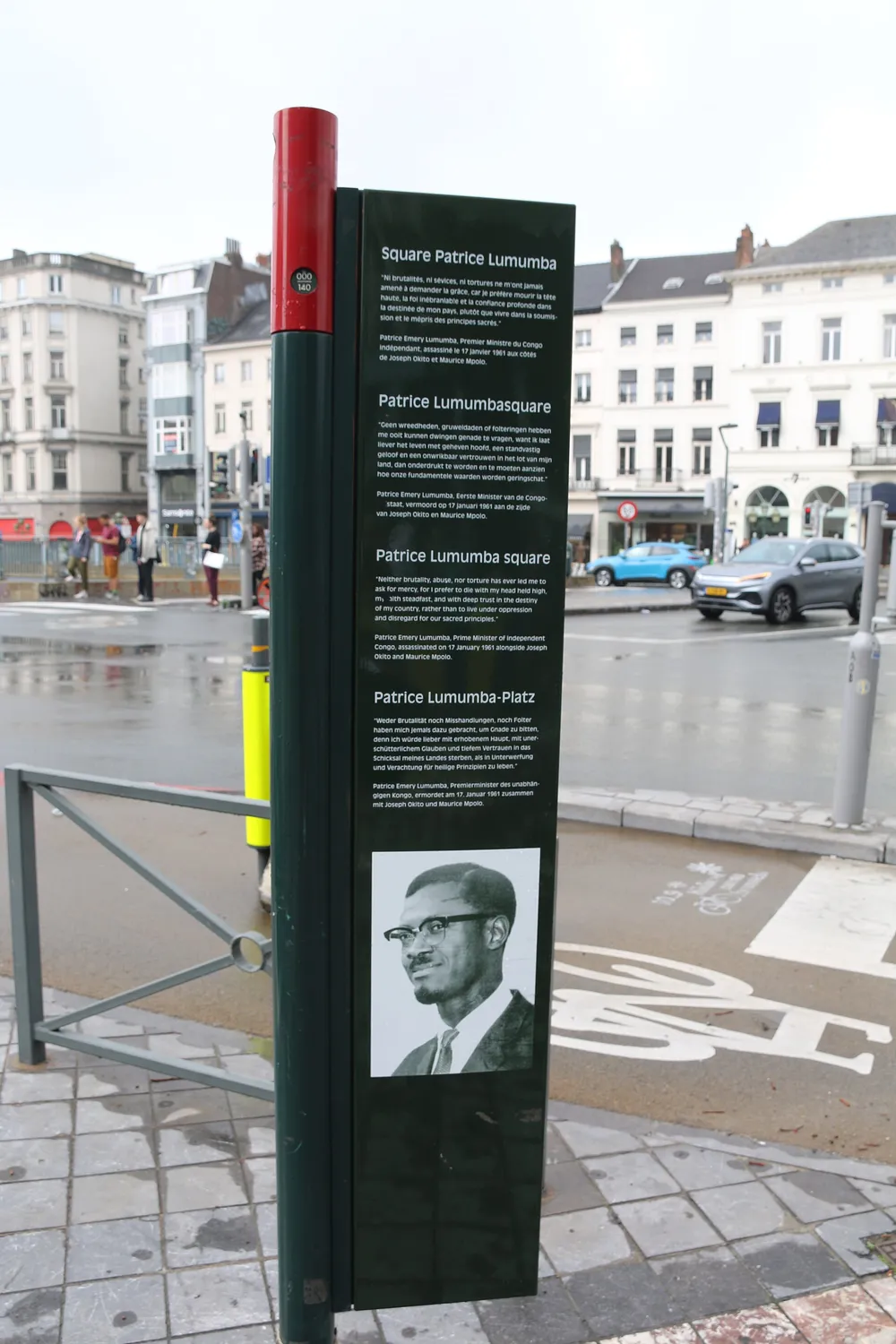
Square Patrice Lumumba, Brussels
Inaugurated on 30 June 2018 beside the Matonge quarter, after years of campaigning by the Congolese diaspora, a few steps from the heart of the capital that once ruled the Congo.
Literature, music and art
Aimé Césaire’s play Une saison au Congo (1966); Sartre’s essay on his political thought; the 1960 rumba Indépendance Cha Cha, which names him; and the painted history of the Congolese artist Tshibumba Kanda Matulu.
The return of 2022
The return and burial of his tooth turned a private grief into a national ceremony, sixty-one years after his death.
In the Democratic Republic of the Congo his portrait hangs in homes and offices, and politicians of every camp claim his name. Across Africa he stands with Nkrumah, Cabral and Biko among the founders of the continent’s modern political memory — remembered less for what he was able to do than for what he refused to accept.