Skip to content

Patrice Émery Lumumba
2 July 1925 — 17 January 1961

Patrice LumumbaA nation’s independence, a continent’s dream.

A postal clerk and self-taught writer from Sankuru who, in barely three years, built the Congo’s first truly national party, helped end eighty years of Belgian rule, and became the first Prime Minister of the independent Republic of the Congo at thirty-four. He insisted on one Congo rather than a country divided by region or ethnicity, and on a sovereignty that would extend to its land and its wealth. Removed from office within months, he was killed in Katanga on 17 January 1961.

  • Congolese independence leader
  • Founder and president of the Mouvement National Congolais (MNC)
  • First Prime Minister of the independent Republic of the Congo
  • African nationalist and Pan-Africanist
  • Advocate of national unity and African self-determination
Enter the archive
  • Freedom
  • Dignity
  • National unity
  • African emancipation
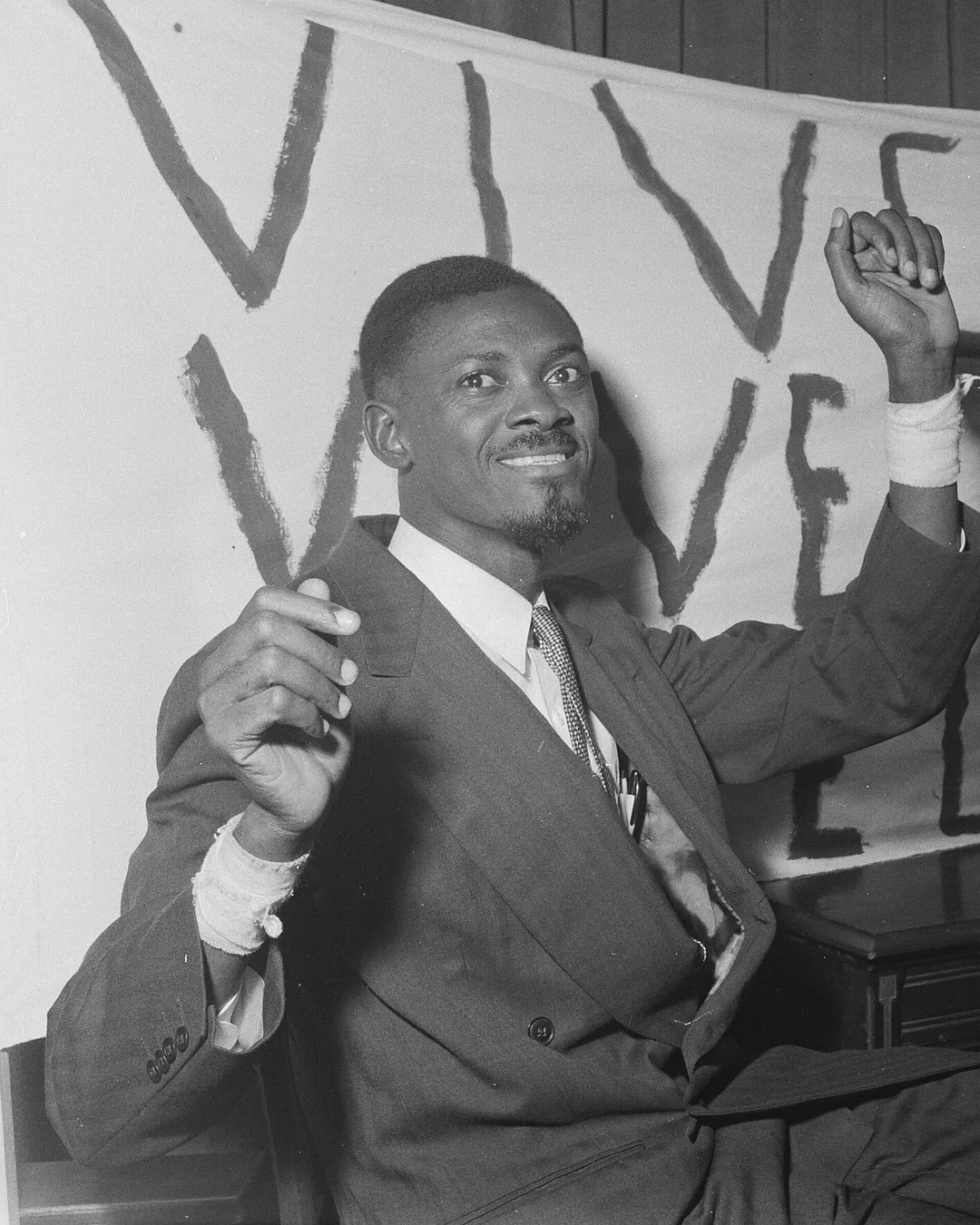
Patrice Lumumba, smiling, raises his fist before a hand-painted banner reading ‘Vive le Congo’; his wrists are bandaged
Brussels, 26 January 1960. Freed from prison in the Congo to join the Round Table conference, Lumumba arrives with his wrists still bandaged.Harry Pot / Anefo · Nationaal Archief, CC0
  1. 1925Born in Onalua, Sankuru
  2. 1958Founds the MNC; speaks at Accra
  3. 1960Independence, 30 June; Prime Minister
  4. 1961Assassinated in Katanga, 17 January

Chapter I · Life

The man before
the martyr

He is remembered for seven months in office and the manner of his death. But Lumumba’s life began long before 1960 — in a Tetela village, a mission school, a post office, a newsroom.

This biography follows him chronologically, through the education he largely gave himself, the colonial city that radicalised him, the party he built and the government he led — so that the end can be understood in the light of everything that came before it.

01 · 1925 — 1940s

Early life and education

Onalua, Sankuru · Kasai

He was born on 2 July 1925 in Onalua, a village in the Katako-Kombe territory of Sankuru, in the Kasai province of the Belgian Congo, and named Élias Okit’Asombo. His father, François Tolenga Otetshima, was a farmer; his mother was Julienne Wamato Lomendja. The family was Tetela, a people of the forest and savannah between the Sankuru and Lomami rivers.

He went to a Protestant mission primary school and then a Catholic mission school — the only kinds of schooling most Congolese could reach. Belgian colonial education was built to produce catechists, clerks and skilled workers, not leaders: secondary schooling was scarce, and at independence fewer than twenty Congolese held university degrees.

Lumumba made up the difference himself. He read voraciously — history, French literature, political philosophy — and began to write. That habit of self-education, and the conviction that a colonised man could argue with the coloniser in his own language, ran through everything that followed.

  • Born Élias Okit’Asombo
  • Tetela heritage
  • Mission-educated, largely self-taught
02 · 1940s — 1957

Early career and political awakening

Léopoldville · Stanleyville

After a one-year course at the colonial post-office training school in Léopoldville, he was posted to Stanleyville (today Kisangani) as a postal clerk. There he became a prominent évolué — the colonial term for Africans with a European-style education — joining the city’s associations, a staff union and its debating circles.

He wrote for the évolué press, including La Croix du Congo and La Voix du Congolais, and saw at close range how the colony worked: separate quarters, separate wages, separate justice. His early politics were reformist — equal pay, an end to the colour bar, a Belgo-Congolese partnership — and in 1956 he toured Belgium on a study trip organised by the Ministry of Colonies.

That year he was arrested for embezzling post-office funds and spent about a year in prison. In this period he wrote a book-length manuscript on the colony’s future, published after his death as Le Congo, terre d’avenir, est-il menacé? On his release in 1957 he moved to Léopoldville to sell beer for the Bracongo brewery — a job that took him into every bar and neighbourhood of the capital, and taught him how to speak to a crowd.

  • Postal clerk, Stanleyville
  • Writer in the évolué press
  • Study trip to Belgium, 1956

03 · 1958 — 1959

The birth of Congolese nationalism

Léopoldville · Accra · Stanleyville

On 5 October 1958 Lumumba and a group of Léopoldville évolués founded the Mouvement National Congolais. Unlike ABAKO, which spoke for the Bakongo of the lower Congo, or the regional parties then forming in Katanga and Kasai, the MNC set out to recruit across every province and people. Lumumba became its president and its voice.

In December 1958 he travelled to Accra for Kwame Nkrumah’s All-African Peoples’ Conference — his first meeting with the leaders of liberation movements from across the continent. He came home with a Pan-African vocabulary and a demand: independence, not reform. His report-back rally in Léopoldville on 28 December drew thousands.

A week later, on 4 January 1959, Léopoldville erupted after the authorities banned an ABAKO meeting; dozens were killed. On 13 January King Baudouin promised independence ‘without fatal delay’. When the MNC split in July 1959 — Albert Kalonji’s wing against Lumumba’s, the MNC-L — Lumumba kept the national line. After riots at an MNC congress in Stanleyville in October 1959 he was arrested and, in January 1960, sentenced to six months.

  • MNC founded 5 October 1958
  • Accra, December 1958
  • Imprisoned November 1959
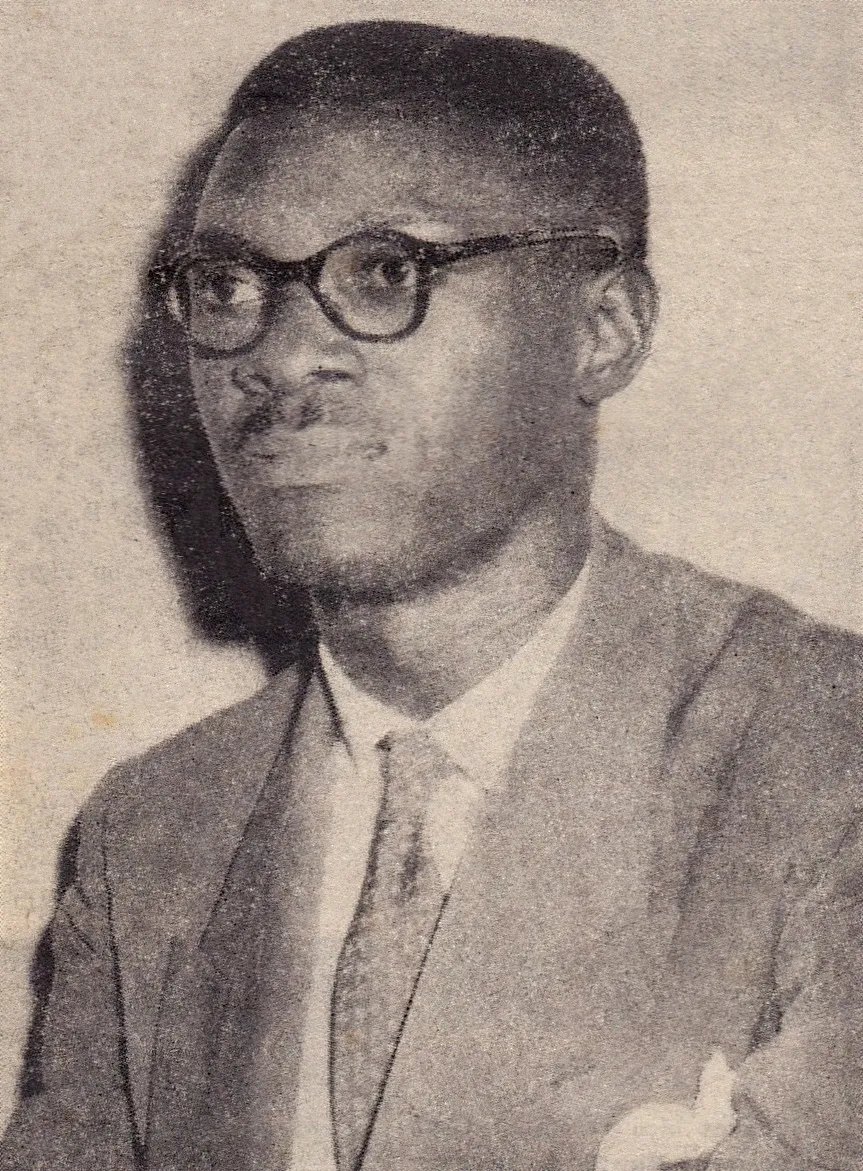
Head-and-shoulders portrait of Patrice Lumumba in glasses, jacket and tie, 1958
Lumumba as pictured in Présence Congolaise, 4 October 1958 — the eve of the MNC’s founding.Présence Congolaise · public domain

04 · 1960

The road to independence

Brussels · Léopoldville

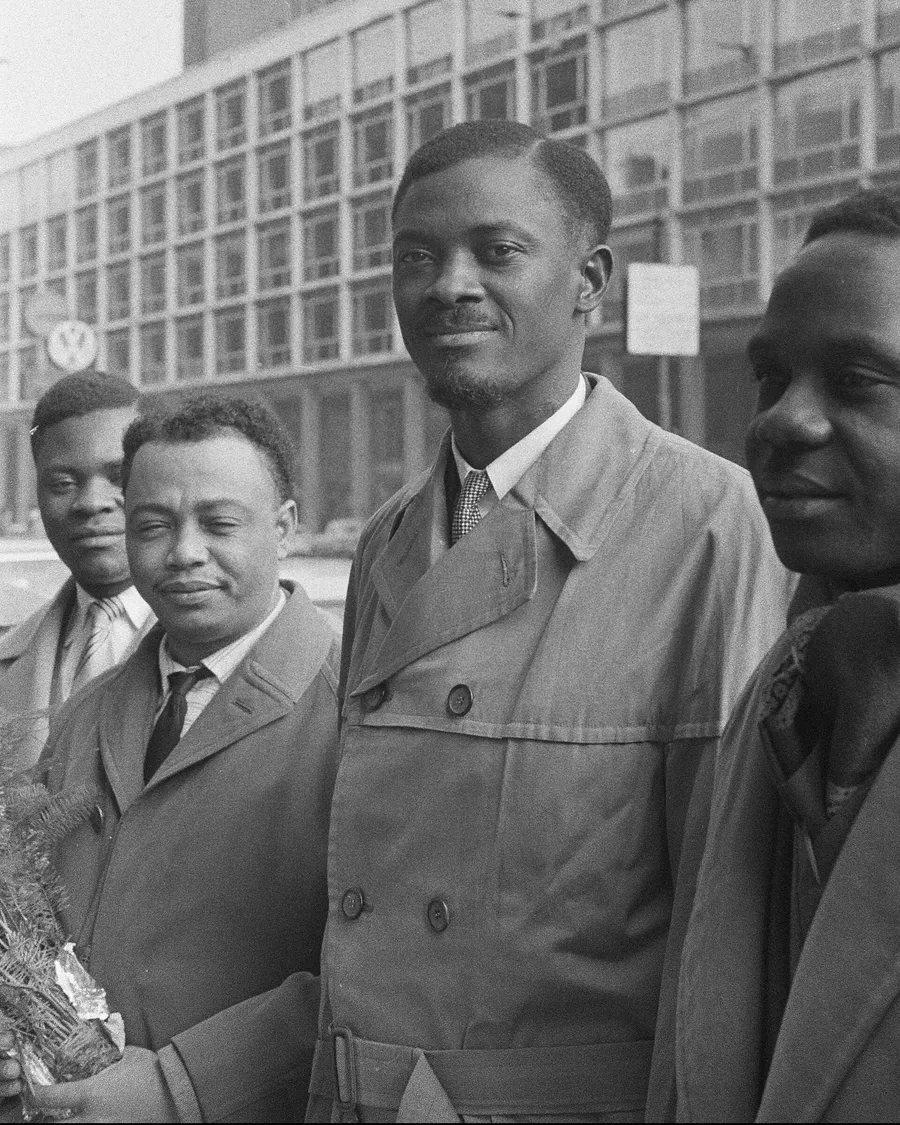
The Round Table conference opened in Brussels on 20 January 1960. The Congolese delegations refused to negotiate without Lumumba; he was freed and flown to Brussels, arriving on 26 January. On 20 February the conference closed with a date for independence: 30 June 1960. ‘We demanded the immediate and unconditional independence of our country,’ he told it. ‘We have just won it.’

In the May 1960 elections the MNC-L and its allies won the largest bloc in the Chamber of Representatives — and the MNC-L was the only party with strong support in several provinces at once. On 23 June parliament approved his government; the next day it elected his rival, Joseph Kasa-Vubu of ABAKO, head of state.

On 30 June, at the Palais de la Nation in Léopoldville, the Congo became independent. Lumumba — Prime Minister and Minister of National Defence — was thirty-four.

  • Round Table, Brussels
  • May 1960 elections
  • Prime Minister at 34
Patrice Lumumba in a raincoat with Congolese delegates on a Brussels street, January 1960
With fellow delegates in Brussels after his release, 26 January 1960.Harry Pot / Anefo · Nationaal Archief, CC0

05 · June — September 1960

Prime Minister of the Congo

Léopoldville

Lumumba inherited a state whose army, administration and economy were still run by Belgians. Within a week the Force Publique mutinied against its Belgian officers. He answered by Africanising the officer corps — Victor Lundula as commander, Joseph-Désiré Mobutu as chief of staff — while Belgium sent in troops without the government’s consent.

On 11 July Moïse Tshombe declared Katanga, the copper province, independent, with Belgian military and corporate backing; in August South Kasai followed. Lumumba and Kasa-Vubu appealed to the United Nations, which sent a peacekeeping force but would not use it to end the secession. Lumumba then turned to the Soviet Union for transport for an offensive towards Kasai and Katanga — a campaign marked by the killing of Luba civilians in South Kasai.

His relationship with Kasa-Vubu, a cautious federalist, broke down. On 5 September the President announced Lumumba’s dismissal; Lumumba replied by dismissing the President, and parliament refused to endorse either decision.

  • Mutiny, 5 July
  • Katanga secession, 11 July
  • UN force arrives, 15 July
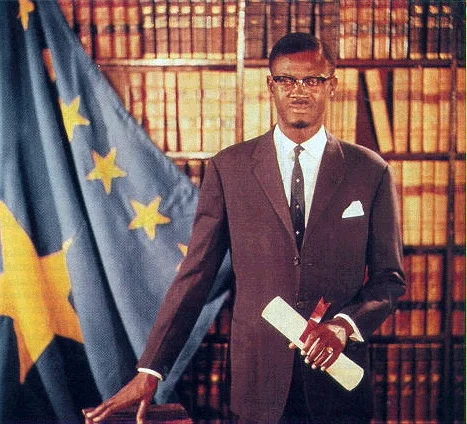
Colour portrait of Prime Minister Lumumba standing before the blue flag with a yellow star, holding a rolled document
Official portrait as Prime Minister, 1960, before the flag of the new republic.Government of the Republic of the Congo · public domain

06 · 1960 — 1961

Overthrow, arrest and assassination

Léopoldville · Thysville · Élisabethville

On 14 September 1960 Colonel Mobutu seized power and ‘neutralised’ the politicians. Lumumba was confined to his residence, encircled by UN troops on the inside and Mobutu’s soldiers on the outside. On the night of 27 November he slipped out and headed east for Stanleyville, where his supporters held power.

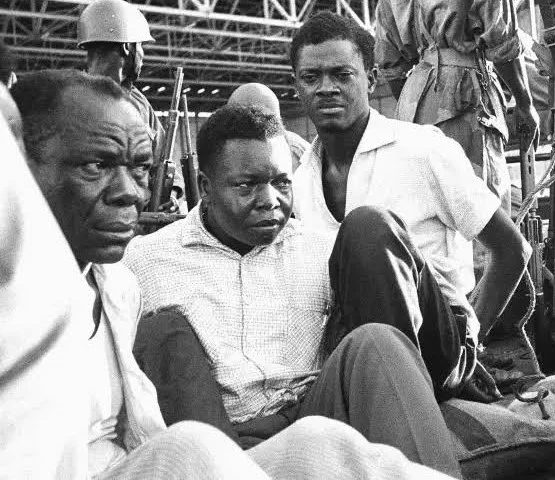
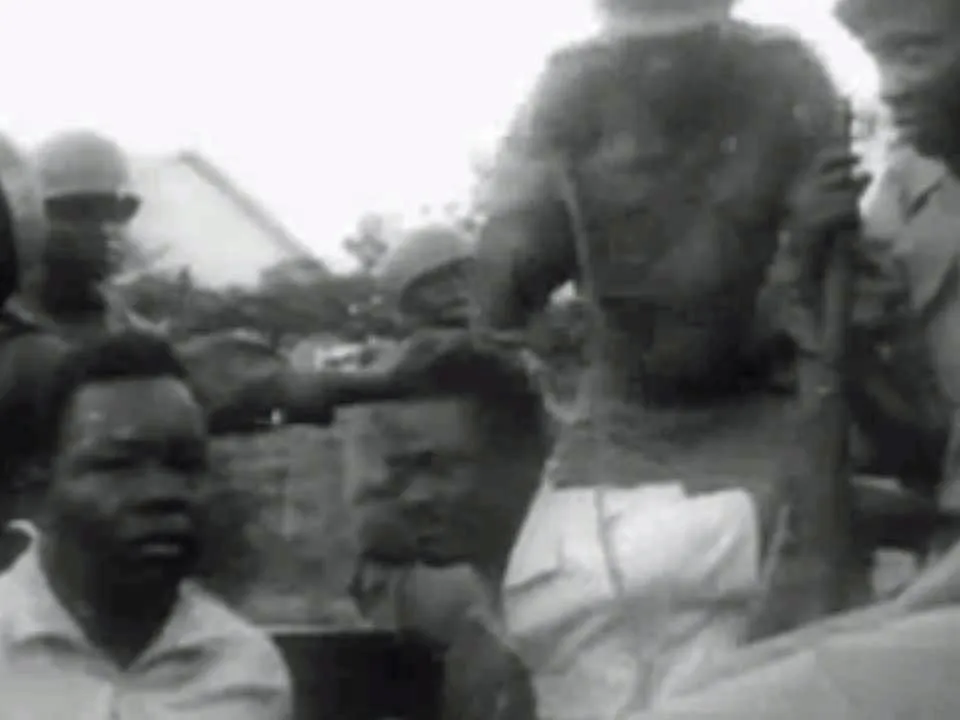
Mobutu’s soldiers caught him on 1 December near the Sankuru river. He was flown back to Léopoldville, beaten in front of news cameras, and imprisoned at Camp Hardy in Thysville. On 17 January 1961 he was flown with two companions — Maurice Mpolo, his Minister of Youth and Sport, and Joseph Okito, Vice-President of the Senate — to Élisabethville, the capital of secessionist Katanga.

That night all three were shot by a firing squad, in the presence of Katangan ministers and Belgian officers. Days later, Belgian policemen dug up the bodies, cut them apart and dissolved them in acid. Katanga announced his death only on 13 February, with an invented story of escape and murder by villagers.

  • Coup, 14 September 1960
  • Captured, 1 December 1960
  • Killed, 17 January 1961
Lumumba, in a white shirt, sitting on the floor of a truck with two other detainees, guarded by soldiers
Lumumba (right) after his capture, December 1960.Associated Press · public domain (copyright not renewed)

Chapter II · The road to independence

The birth of
a free Congo

Seventy-five years separate Leopold II’s Free State from the Republic of 30 June 1960. Lumumba’s movement covered the last stretch in under two.

The timeline below runs from the Free State’s rubber regime, through the Belgian Congo, to the movements, conferences and elections that ended colonial rule. Filter it by period.

  1. Colonial rule

    1885

    The Congo Free State

    In the era of the Berlin Conference, the Congo basin is recognised as the personal possession of King Leopold II of the Belgians — not a Belgian colony, but one man’s ‘État indépendant du Congo’.

  2. Colonial rule

    1890s — 1908

    The rubber regime

    To meet quotas for wild rubber and ivory, villages are subjected to forced labour, hostage-taking, flogging and mutilation by the Force Publique and concession companies. The death toll is debated by historians; that the population fell catastrophically is not.

  3. Colonial rule

    1904

    The Casement Report

    British consul Roger Casement documents the atrocities; with E. D. Morel’s Congo Reform Association, it turns the Free State into an international scandal.

  4. Colonial rule

    1908

    The Belgian Congo

    Under pressure, Belgium annexes the territory. The Free State becomes the Belgian Congo, governed from Brussels for the next fifty-two years.

  5. Colonial rule

    1908 — 1950s

    State, Church and company

    The colony is run by an alliance of administration, missions and mining companies such as the Union Minière du Haut-Katanga. Forced cultivation, a colour bar in cities, and a paternalist policy that offers Africans primary schooling but no political rights.

  6. The movement

    1955 — 1956

    The first demands

    A Belgian professor, A. A. J. Van Bilsen, proposes a thirty-year plan for emancipation. The Catholic évolués of Conscience Africaine call for a gradual path; ABAKO, the Bakongo association led by Joseph Kasa-Vubu, replies by demanding independence now.

  7. The movement

    December 1957

    The first elections

    Congolese vote for the first time, in municipal elections in Léopoldville, Élisabethville and Jadotville. ABAKO sweeps the capital.

  8. The movement

    August 1958

    Across the river

    In Brazzaville, facing Léopoldville across the Congo river, Charles de Gaulle offers France’s African colonies a vote on their future. The contrast with Belgian silence is not lost on Léopoldville.

  9. The movement

    5 October 1958

    The MNC is founded

    The Mouvement National Congolais sets out to be what no party yet is: national, recruiting in every province. Lumumba becomes its president.

  10. The movement

    5 — 13 December 1958

    All-African Peoples’ Conference, Accra

    Lumumba joins Nkrumah’s gathering of liberation movements from across the continent, and returns to demand immediate independence at a mass rally in Léopoldville.

  11. The movement

    January 1959

    The Léopoldville riots

    After an ABAKO meeting is banned on 4 January, the capital erupts; the official toll is 49 dead, and other estimates are far higher. On 13 January King Baudouin promises independence ‘without fatal delay’.

  12. Independence

    20 January — 20 February 1960

    The Brussels Round Table

    Congolese parties, united as a common front, win their demand: Lumumba is released to attend, and independence is set for 30 June 1960 — barely four months away.

  13. Independence

    April — May 1960

    The economic Round Table

    A second conference settles economic and financial questions. Most party leaders are campaigning at home and send young advisers; the colony’s economic power stays largely where it was.

  14. Independence

    19 May 1960

    The Loi fondamentale

    Belgium passes the provisional constitution of the new state: a parliamentary system with a head of state and a Prime Minister — a division of power that will break within months.

  15. Independence

    May 1960

    The national elections

    The MNC-L and its allies win the largest bloc in the Chamber. On 23 June parliament approves Lumumba’s government; on 24 June it elects Kasa-Vubu President.

  16. Independence

    30 June 1960

    Independence

    The Republic of the Congo is proclaimed at the Palais de la Nation in Léopoldville, in the presence of King Baudouin.

Palais de la Nation, Léopoldville · 30 June 1960

The speech
the King heard

King Baudouin spoke first. ‘The independence of the Congo,’ he began, ‘is the crowning of the work conceived by the genius of King Leopold II.’ President Kasa-Vubu replied with a courteous address. Then Lumumba — not on the official programme — rose to speak, not to the King but to ‘Congolais et Congolaises, combattants de l’indépendance aujourd’hui victorieux’.

The speech was broadcast live and repeatedly interrupted by applause. Belgian officials took it as an insult; Lumumba offered a more conciliatory toast at lunch later that day. But the words had been said, and they travelled across Africa.

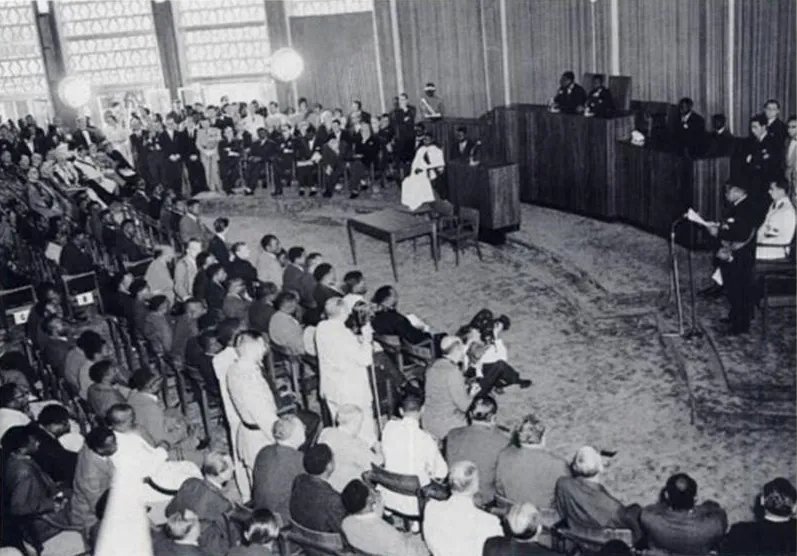
Wide view of the independence ceremony hall in Léopoldville, with dignitaries on a stage and a seated audience
The independence ceremony at the Palais de la Nation, 30 June 1960, as President Kasa-Vubu speaks.Congopresse · public domain
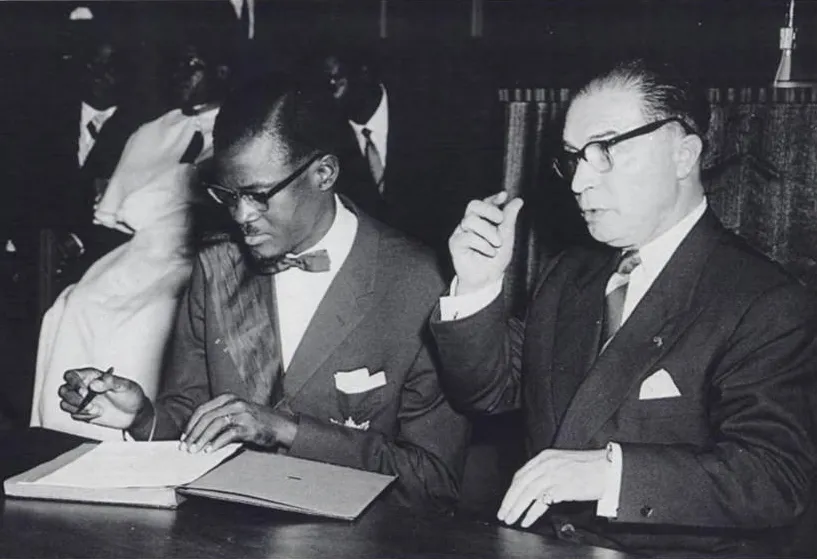
Patrice Lumumba and Belgian Prime Minister Gaston Eyskens seated side by side, signing documents
Lumumba and Belgian Prime Minister Gaston Eyskens sign the act of independence, 30 June 1960.Congopresse · public domain

Original · French

  1. « Nous avons connu le travail harassant, exigé en échange de salaires qui ne nous permettaient ni de manger à notre faim, ni de nous vêtir ou nous loger décemment, ni d’élever nos enfants comme des êtres chers. »

    We have experienced forced labour in exchange for pay that did not allow us to satisfy our hunger, to clothe ourselves, to have decent lodgings or to bring up our children as dearly loved ones.

  2. « Nous avons connu les ironies, les insultes, les coups que nous devions subir matin, midi et soir, parce que nous étions des nègres. »

    Morning, noon and night we were subjected to jeers, insults and blows because we were “Negroes”.

  3. « Nous avons connu que la loi n’était jamais la même selon qu’il s’agissait d’un blanc ou d’un noir : accommodante pour les uns, cruelle et inhumaine pour les autres. »

    We have not forgotten that the law was never the same for the white and the black, that it was lenient to the ones, and cruel and inhuman to the others.

  4. « Ensemble, mes frères, mes sœurs, nous allons commencer une nouvelle lutte, une lutte sublime qui va mener notre pays à la paix, à la prospérité et à la grandeur. »

    Brothers, let us commence together a new struggle, a sublime struggle that will lead our country to peace, prosperity and greatness.

French text: La pensée politique de Patrice Lumumba, ed. Jean Van Lierde (Présence Africaine, 1963). English: The Truth about a Monstrous Crime of the Colonialists (Moscow, 1961), via the Marxists Internet Archive’s full text.

Why it mattered

  1. 1
    It named the colonial experience

    Baudouin had praised the ‘genius’ of Leopold II. Lumumba answered, before the King and the world’s press, with an inventory of what colonial rule had meant for those who lived under it: forced labour, the whip, the colour bar, land taken by law.

  2. 2
    It claimed independence as a victory

    Independence, he said, had not been a gift: ‘no Congolese will ever forget that independence was won in struggle’. The Congolese people were its authors, not its recipients.

  3. 3
    It looked forward

    Most of the speech is a programme — social justice, fair wages, the end of discrimination, the land for its people, national unity above ‘tribal quarrels’, and the Congo as ‘a decisive step towards the liberation of the whole African continent’.

Chapter III · Speeches, thought and letters

A voice
before a pen

Steve Biko is remembered for his essays and Amílcar Cabral for his theory. Lumumba is remembered for what he said aloud — at rallies, on the radio, before a king — and for the letters he wrote from prison.

He had little time to write. His one book was written in 1956–57; most of what survives are speeches, broadcasts, press statements and correspondence, collected after his death. Where a full text is available online, the entry links to it.

Historic speeches

  1. December 1958

    Accra, Ghana

    Address to the All-African Peoples’ Conference

    His first appearance on a continental stage. Lumumba presented the MNC to the liberation movements gathered by Nkrumah and set the Congo’s struggle inside Africa’s: independence for a united Congo, as part of a free continent.

  2. 28 December 1958

    Léopoldville

    Report from Accra

    Back from Ghana, he told a crowd of thousands what he had seen and heard there, and turned the MNC’s demand into one word: independence.

  3. 20 February 1960

    Brussels

    Closing statement at the Round Table

    Speaking for the MNC as the conference fixed 30 June for independence: ‘We demanded the immediate and unconditional independence of our country. We have just won it.’

  4. 30 June 1960

    Léopoldville

    Speech at the proclamation of independence

    The address that answered King Baudouin, named the experience of colonial rule, and set out a programme for a free and united Congo.

  5. July 1960

    Léopoldville · Thysville

    Addresses to the army

    Facing the Force Publique mutiny, he went to the barracks with President Kasa-Vubu and, on 8 July, announced the Africanisation of the officer corps of what became the Armée Nationale Congolaise.

  6. August 1960

    Radio address

    Address to Congolese youth

    A call to the young to carry a ‘peaceful revolution’, and a reminder that liberation would have to be political, economic and spiritual at once.

  7. 25 August 1960

    Léopoldville

    Opening of the All-African Conference

    Hosting ministers from independent African states in the middle of the crisis, he presented the Congo’s fight against secession as a test for the whole continent.

  8. 5 September 1960

    National radio

    Broadcast rejecting his dismissal

    Within hours of Kasa-Vubu’s announcement: ‘The Government, which has been democratically elected by the nation and has won the unanimous confidence of Parliament, can only be dismissed when it loses the trust of the people.’

  9. 10 September 1960

    To the UN Security Council

    Solemn appeal to the United Nations

    An appeal to the Council and every member state against what his government saw as UN obstruction — the closure of airports and the radio station — in the days before Mobutu’s coup.

Political philosophy

Eight recurring ideas

Lumumba was a practical politician, not a systematic theorist, and his views moved quickly — from the reformism of 1956 to the radical nationalism of 1960. These themes run through the speeches of his last two years. Quotations are from his own words.

  1. 01

    African nationalism

    A nation is made by its people’s will, not by colonial maps or ethnic lines. Independence was the precondition for everything else.

  2. 02

    Unity beyond ethnicity and region

    Against federalists and secessionists, a single Congo. ‘I ask you all to sink your tribal quarrels: they weaken us and may cause us to be despised abroad.’

  3. 03

    Pan-African unity

    The Congo’s independence was ‘a decisive step towards the liberation of the whole African continent’ — and its survival depended on Africa standing with it.

  4. 04

    National sovereignty

    Foreign help was welcome when it came ‘in a spirit of friendship’, not when it sought to impose ‘an alien policy’. Sovereignty meant the right to choose one’s partners.

  5. 05

    Economic independence

    Political independence without control of land, mines and revenue would be a flag without a state. He called on Congolese to build ‘a national economy’ and ‘our economic independence’.

  6. 06

    The rejection of colonial domination

    Not only of Belgian rule, but of the paternalism behind it — the belief that Africans must be guided, schooled and supervised before they could govern.

  7. 07

    Human dignity and equality

    ‘Without dignity there is no freedom, without justice there is no dignity and without independence there are no free men.’

  8. 08

    International solidarity

    Non-alignment in practice: aid from any quarter that respected the Congo’s choices, and a common front with Asia and the newly free nations.

Letters and correspondence

The last letter

Written in Thysville prison to his wife, Pauline Opango, in the last weeks of his life, the letter is the closest thing Lumumba left to a testament.

  1. « Nous ne sommes pas seuls. L’Afrique, l’Asie et les peuples libres et libérés de tous les coins du monde se trouveront toujours aux côtés des millions de Congolais qui n’abandonneront la lutte que le jour où il n’y aura plus de colonisateurs et leurs mercenaires dans notre pays. »

    We are not alone. Africa, Asia, the free peoples and the peoples fighting for their freedom in all corners of the world will always be side by side with the millions of Congolese who will not give up the struggle while there is even one colonialist or colonialist mercenary in our country.

  2. « Ne me pleure pas, ma compagne. Moi je sais que mon pays, qui souffre tant, saura défendre son indépendance et sa liberté. »

    Do not weep for me. I know that my tormented country will be able to defend its freedom and its independence.

English: The Truth about a Monstrous Crime of the Colonialists (Moscow, 1961). Read the full letter

  • July — August 1960

    Correspondence with Dag Hammarskjöld

    Public letters to the UN Secretary-General on the withdrawal of Belgian troops and the UN’s refusal to act against the Katanga secession.

    Read
  • 4 January 1961

    Letter to Rajeshwar Dayal

    From Thysville, to the UN Secretary-General’s Special Representative: a description of the conditions in which he and seven other parliamentarians were held.

    Read
  • 1950s

    Dawn in the Heart of Africa

    His poem ‘Aube dans le cœur de l’Afrique’ — a reminder that the politician began as a writer.

    Read

Chapter IV · Books and documents

The written
record

One book of his own, a handful of collections of his speeches, and a growing shelf of history that has had to reconstruct, from archives, what was hidden for forty years.

Books are grouped by kind: what Lumumba wrote, collections of his speeches and letters, and the biographies and studies written about him. A selection of primary documents — the official inquiries and records — follows.

Written by Lumumba

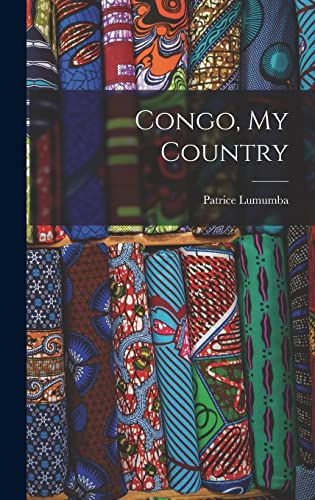
  1. Office de Publicité, Brussels, 1961 · English: Pall Mall Press, London, 1962

    Le Congo, terre d’avenir, est-il menacé?

    Published in English as Congo, My Country

    Patrice Lumumba

    His only book, written in 1956–57, around the time of his trial and imprisonment, and published after his death. It shows the évolué Lumumba before the radical one: a reformer arguing for equal treatment and a Belgo-Congolese partnership.

    SignificanceThe essential document of his intellectual starting point — and of how far and how fast his politics travelled between 1956 and 1960.

    Find on Amazon : Le Congo, terre d’avenir, est-il menacé?

His speeches and writings

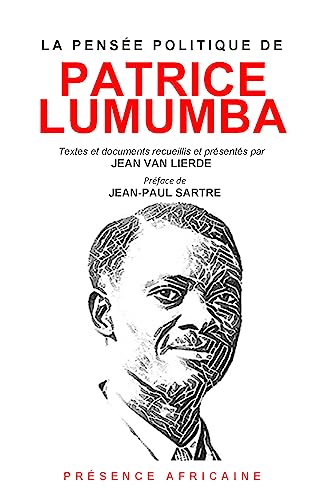
  1. Présence Africaine, Paris, 1963

    La pensée politique de Patrice Lumumba

    Edited by Jean Van Lierde · preface by Jean-Paul Sartre

    The founding collection of his speeches, letters, press statements and interviews from 1958 to 1961, gathered by the Belgian pacifist Jean Van Lierde, a friend and adviser. Sartre’s long preface is a major essay in its own right.

    SignificanceThe standard French source for most of the texts quoted on this site.

    Buy on Amazon : La pensée politique de Patrice Lumumba
  2. Little, Brown, Boston, 1972

    Lumumba Speaks

    The Speeches and Writings of Patrice Lumumba, 1958–1961

    Edited by Jean Van Lierde · translated by Helen R. Lane

    The English edition of Van Lierde’s collection, with Sartre’s introduction — for decades the main way English-speaking readers encountered Lumumba in his own words.

    SignificanceThe most complete English collection of his speeches and correspondence.

    Buy on Amazon : Lumumba Speaks
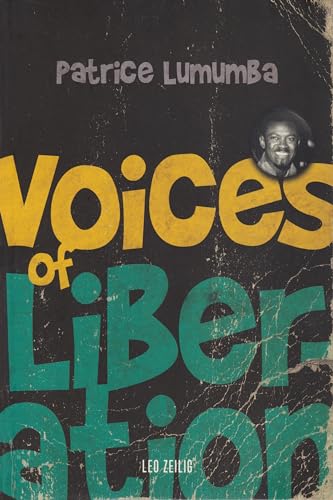
  3. HSRC Press, Cape Town, 2012

    Patrice Lumumba

    Voices of Liberation

    Compiled and introduced by Leo Zeilig

    A selection of his key speeches and letters in South Africa’s Voices of Liberation series, with a biographical introduction that sets each text in context.

    SignificanceA concise, affordable reader for students coming to Lumumba for the first time.

    Buy on Amazon : Patrice Lumumba

Biographies and historical studies

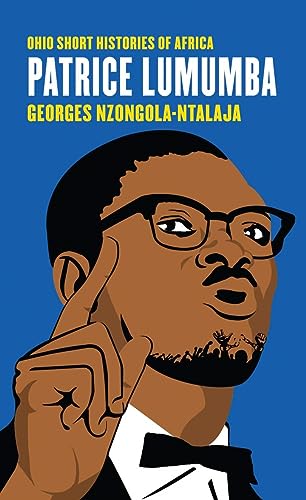
  1. Ohio University Press, Ohio Short Histories of Africa, 2014

    Patrice Lumumba

    Georges Nzongola-Ntalaja

    A short, authoritative life by one of the Congo’s leading political scientists, who places Lumumba in the history of Congolese struggles for democracy.

    SignificanceThe best brief biography by a Congolese scholar.

    Buy on Amazon : Patrice Lumumba
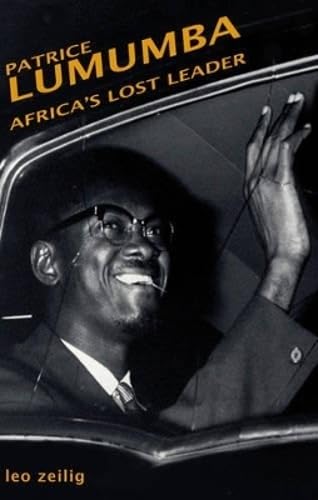
  2. Haus Publishing, London, 2008

    Lumumba: Africa’s Lost Leader

    Leo Zeilig

    A readable full-length biography that follows Lumumba from Onalua to Katanga and pays close attention to the MNC as a political organisation.

    SignificanceA good narrative introduction to the whole life.

    Buy on Amazon : Lumumba: Africa’s Lost Leader
  3. Institut Africain-CEDAF / L’Harmattan, 1998

    Patrice Lumumba: jeunesse et apprentissage politique, 1925–1956

    Jean Omasombo Tshonda and Benoît Verhaegen

    The detailed scholarly study of his childhood, schooling and Stanleyville years, based on interviews and colonial archives. Followed by a second volume on 1956–1960.

    SignificanceThe reference work on the early life this site’s biography draws on.

    Find on Amazon : Patrice Lumumba: jeunesse et apprentissage politique, 1925–1956
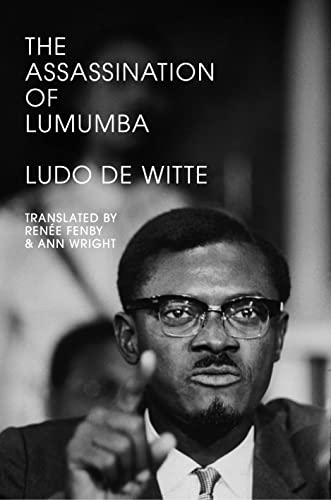
  4. Verso, London, 2001 · Dutch original De moord op Lumumba, 1999

    The Assassination of Lumumba

    Ludo De Witte

    The book that reopened the case. Working from Belgian archives, De Witte documented the role of Belgian ministers, officers and advisers in Lumumba’s transfer to Katanga and his killing.

    SignificanceIts publication led directly to the Belgian parliamentary inquiry of 2000–2001.

    Buy on Amazon : The Assassination of Lumumba
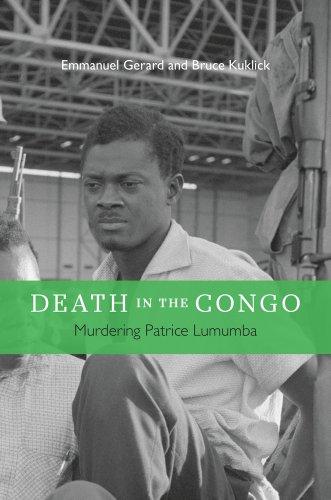
  5. Harvard University Press, 2015

    Death in the Congo: Murdering Patrice Lumumba

    Emmanuel Gerard and Bruce Kuklick

    A Belgian and an American historian reconstruct the decisions in Léopoldville, Brussels, Washington, New York and Élisabethville that led to 17 January 1961, weighing each actor’s responsibility.

    SignificanceThe most careful assessment of shared responsibility.

    Buy on Amazon : Death in the Congo: Murdering Patrice Lumumba
  6. Alfred A. Knopf, New York, 2023

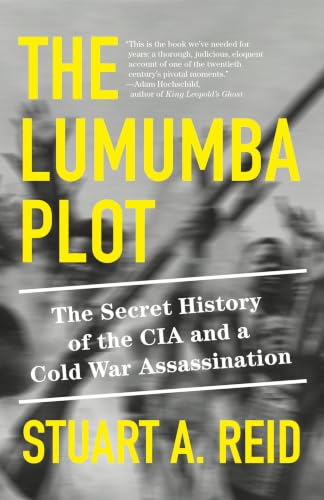
    The Lumumba Plot

    The Secret History of the CIA and a Cold War Assassination

    Stuart A. Reid

    A narrative history of American policy towards Lumumba, from the Eisenhower administration’s alarm to the CIA’s poison plot and its backing of Mobutu.

    SignificanceThe fullest account of the American side, drawing on declassified records.

    Buy on Amazon : The Lumumba Plot
  7. Penguin, 1972

    Conflict in the Congo: The Rise and Fall of Lumumba

    Thomas Kanza

    A memoir-history by the young diplomat who represented Lumumba’s government at the United Nations — an insider’s view of 1960.

    SignificanceTestimony from inside Lumumba’s government.

    Buy on Amazon : Conflict in the Congo: The Rise and Fall of Lumumba
  8. Zed Books, London, 2002

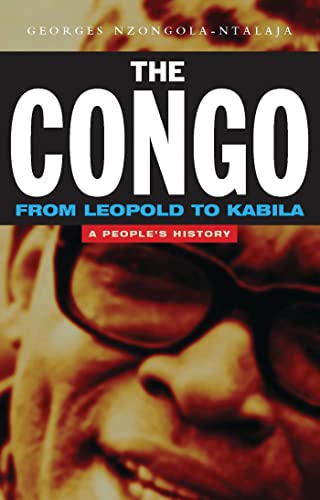
    The Congo from Leopold to Kabila: A People’s History

    Georges Nzongola-Ntalaja

    The wider story — from the Free State to the wars of the 1990s — in which Lumumba’s government is one chapter of a long struggle for democracy.

    SignificanceEssential context for the colonial background and the crisis.

    Buy on Amazon : The Congo from Leopold to Kabila: A People’s History

Primary historical documents

The official record, at source

Chapter V · The Congo Crisis and the assassination

Seventy days
in power

Between 30 June and 5 September 1960 the new state faced a mutiny, a foreign intervention, two secessions and the hostility of the Cold War’s great powers. It did not survive intact; its Prime Minister did not survive at all.

This chapter sets out what happened and who was involved, and separates established fact, the findings of official inquiries, the archival evidence, and the questions historians still dispute.

The Republic of the Congo, 1960 — 1961Select a place
KATANGASOUTH KASAIAtlanticCongo-BrazzavilleAngolaN. RhodesiaCongo river
Katanga secession South Kasai (approximate area)Boundaries: Natural Earth

The Congo Crisis

  1. 1

    The mutiny

    From 5 July, soldiers of the Force Publique rise against Belgian officers who had told them independence would change nothing. Panic spreads among Europeans; tens of thousands leave.

  2. 2

    Katanga secedes

    On 11 July Moïse Tshombe proclaims Katanga independent, backed by Belgian troops, officers and advisers and by the mining interests of the Union Minière du Haut-Katanga. The province produced much of the colony’s wealth.

  3. 3

    Belgian intervention

    Belgium sends troops without the Congolese government’s consent, to protect its nationals and, in Katanga, to shield the secession. The Congo breaks off diplomatic relations.

  4. 4

    The UN arrives

    On 12 July Lumumba and Kasa-Vubu ask the UN for help. Security Council Resolution 143 creates ONUC; its first troops land on 15 July. But Dag Hammarskjöld refuses to use the force against Katanga.

  5. 5

    The Cold War

    Lumumba asks Washington, then Moscow, for help. Soviet transport aircraft and trucks arrive in August. In Washington and Brussels, he is now seen as a danger to be removed.

The overthrow

  1. 5 September 1960

    Kasa-Vubu dismisses Lumumba by radio; Lumumba dismisses Kasa-Vubu. Parliament votes to annul both decisions and, in the Senate, confirms its confidence in Lumumba.

  2. 14 September 1960

    Colonel Mobutu announces that the army is ‘neutralising’ the politicians, with American encouragement and money. A College of Commissioners replaces the government.

  3. October — November 1960

    Lumumba is confined to his residence. On 22 November the UN General Assembly seats Kasa-Vubu’s delegation, not his. On 27 November he escapes.

  4. 1 — 2 December 1960

    Captured near the Sankuru, he is flown to Léopoldville, beaten before cameras and taken to Camp Hardy, Thysville.

Katanga · 17 January 1961

The assassination

Patrice Lumumba was thirty-five. He died with Maurice Mpolo, his Minister of Youth and Sport, and Joseph Okito, Vice-President of the Senate. Their deaths were hidden for nearly four weeks and their bodies destroyed — which is why there is no grave, and why the account below rests on testimony and archives assembled decades later.

  1. Morning

    Fearing unrest in the Thysville garrison, the authorities in Léopoldville decide to move Lumumba, Mpolo and Okito. They are driven to Moanda and put on a plane.

  2. Afternoon

    The prisoners are beaten throughout the flight. At Élisabethville airport they are handed to Katangan forces and taken to a house outside the city, where the beatings continue.

  3. Night

    In the bush near the city, before Katangan ministers and Belgian officers, a firing squad shoots the three men one after another.

  4. Days after

    To erase all trace, Belgian police officers exhume the bodies, cut them apart and dissolve them in acid.

  • Patrice Lumumba
  • Maurice Mpolo
  • Joseph Okito

International responsibility

What is known, and how we know it

Responsibility for Lumumba’s death was shared — between Congolese rivals in Léopoldville who sent him to Katanga, the Katangan leaders who received him, the Belgian officers and advisers around them, and governments in Brussels and Washington that wanted him gone.

Each statement below is labelled by the kind of evidence behind it.

  • Established fact

    Lumumba, Maurice Mpolo and Joseph Okito were shot by a firing squad near Élisabethville on the night of 17 January 1961, hours after being flown from Thysville.

    Source: Belgian parliamentary inquiry, 2001; Gerard and Kuklick, 2015

  • Established fact

    Katangan leaders, among them Moïse Tshombe and his interior minister Godefroid Munongo, were present. So were Belgian officers serving in Katanga’s forces, among them police commissioner Frans Verscheure and captain Julien Gat.

    Source: Belgian parliamentary inquiry, 2001

  • Established fact

    Belgian police officer Gérard Soete and his brother dismembered the bodies and dissolved them in acid. Soete admitted this publicly around 1999–2000 and said he had kept remains, including teeth.

    Source: Soete’s own testimony; De Witte, 1999

  • Official finding

    Certain members of the Belgian government and other Belgian actors bore a ‘moral responsibility’ for the circumstances that led to Lumumba’s death. The inquiry found no document showing that the government ordered the killing.

    Source: Belgian Chamber of Representatives, report of 16 November 2001

  • Official finding

    The CIA plotted to assassinate Lumumba in 1960 and sent poison to Léopoldville, but the plan was not carried out. The committee found no evidence that the CIA was involved in his actual killing.

    Source: US Senate Church Committee, 1975

  • Archival evidence

    On 6 October 1960 the Belgian minister for African affairs, Harold d’Aspremont Lynden, cabled that ‘the main objective to pursue in the interest of the Congo, Katanga and Belgium is clearly the definitive elimination of Lumumba’.

    Source: Belgian diplomatic archives, quoted in the 2001 inquiry

  • Archival evidence

    On 26 August 1960 CIA Director Allen Dulles cabled the Léopoldville station that Lumumba’s ‘removal must be an urgent and prime objective’.

    Source: Cable quoted in the Church Committee report, 1975

  • Archival evidence

    Declassified US records show covert American funding and support for Mobutu and anti-Lumumba politicians from 1960.

    Source: Foreign Relations of the United States, vol. XXIII, 2013

  • Contested

    Whether ‘élimination définitive’ meant political or physical elimination. The inquiry treated the wording as ambiguous; some historians read it as a licence to kill.

    Source: Interpretation of the 6 October 1960 telegram

  • Contested

    Whether President Eisenhower personally ordered Lumumba’s assassination. A note-taker testified that he understood a remark at an August 1960 National Security Council meeting as such an order; others present disputed it. The Church Committee could not settle the question.

    Source: Church Committee testimony, 1975

  • Contested

    A British role. In 2013 a member of the House of Lords wrote that the MI6 officer Daphne Park had told him, shortly before her death, that she had ‘organised’ it. No documentary evidence has been published.

    Source: Letter to the London Review of Books, 2013

  • Contested

    The responsibility of the United Nations, whose troops protected Lumumba’s residence but did not intervene when he was captured, beaten and transferred. Historians differ on what ONUC could or should have done.

    Source: Historical debate

The reckoning

Apology and return

  1. 2002

    Belgium apologises

    On 5 February 2002, following the inquiry, Foreign Minister Louis Michel presented the Belgian government’s ‘profound and sincere regrets’ and its apologies to Lumumba’s family and the Congolese people, and announced a foundation in his name.

  2. 2022

    A tooth comes home

    In 2016 Belgian investigators seized a tooth kept by Gérard Soete’s family — the only known remains of Lumumba. On 20 June 2022, in Brussels, Prime Minister Alexander De Croo handed it to his children and apologised for Belgium’s moral responsibility: a man, he said, had been murdered for his political convictions, his words and his ideals.

    The relic toured the country and was laid to rest on 30 June 2022 — the sixty-second anniversary of independence — in a mausoleum in Kinshasa.

  3. 2025

    A case in court

    Acting on a complaint filed by the Lumumba family in 2011, Belgian federal prosecutors asked in June 2025 that Étienne Davignon — a young diplomat in 1960, and the last surviving Belgian named in the complaint — be sent for trial on war-crimes charges.

Chapter VI · Cinema and archival media

On screen,
on record

For forty years the most powerful images of Lumumba were newsreels of his humiliation. Filmmakers — above all the Haitian director Raoul Peck — set out to give him back his voice.

Feature film · 2000

Lumumba

A film by Raoul Peck

Directed by Raoul Peck · written by Raoul Peck and Pascal Bonitzer

Lumumba (2000)

Opening at the end — with Belgian policemen destroying the bodies — the film follows Lumumba from beer salesman to Prime Minister to prisoner, narrated in his own voice from beyond the grave. Eriq Ebouaney plays Lumumba with a restless, charismatic energy; the 30 June speech is staged in full.

A French, Belgian, German and Haitian co-production, it premiered at the Cannes Film Festival’s Directors’ Fortnight in 2000. War in the Congo made filming there impossible; it was shot in Zimbabwe and Mozambique.

Released as Ludo De Witte’s book was reopening the case in Belgium, it brought Lumumba’s story to international audiences that had known him, if at all, as a Cold War headline — and remains the most widely seen portrayal of his life.

Principal cast

Eriq Ebouaney
Patrice Lumumba
Alex Descas
Joseph-Désiré Mobutu
Théophile Moussa Sowié
Maurice Mpolo
Maka Kotto
Joseph Kasa-Vubu
Dieudonné Kabongo
Godefroid Munongo
Pascal Nzonzi
Moïse Tshombe
Mariam Kaba
Pauline Lumumba
Production details on IMDb

Documentaries

  • Documentary · dir. Raoul Peck · 1991

    Lumumba: La mort du prophète

    Peck’s first film on Lumumba: an essay that mixes archive footage, interviews with those who knew him and the director’s own memories of a childhood in Kinshasa, asking how a man can be erased from history.

  • Documentary · dir. Thomas Giefer · 2000 · Une mort de style colonial

    Mord im Kolonialstil

    A German television investigation in which Belgian participants, among them Gérard Soete, describe on camera the killing and the destruction of the bodies.

  • Documentary · dir. Johan Grimonprez · 2024

    Soundtrack to a Coup d’État

    A montage film that sets the Congo Crisis against the jazz diplomacy of the Cold War — Louis Armstrong, Abbey Lincoln, Max Roach — and the UN debates of 1960–61. Nominated for the Academy Award for Best Documentary Feature.

Archival media

Footage, sound and photographs

Newsreel frame showing Lumumba among soldiers, December 1960
Frame from ‘Lumumba Seized’, Universal Newsreel, 5 December 1960.Universal Studios · CC0

Chapter VII · Pan-Africanism, unity and legacy

A nation’s
unfinished idea

Lumumba governed for less than three months. His idea of the Congo — one country, master of its own wealth, part of a free Africa — has outlived every regime that followed.

  1. 01

    Congolese national identity

    • He was the first Congolese politician to build a party that recruited in every province and spoke for the country as a whole.
    • He opposed both the ethnic federalism of his rivals and the secessions of Katanga and South Kasai, insisting on one Congo.
    • His idea of sovereignty extended to the economy: the Congo’s land and mineral wealth should serve the Congolese.
  2. 02

    Pan-Africanism

    • Accra in 1958 made him part of a continental movement; Kwame Nkrumah became an ally and adviser, and Ghanaian troops served in the UN force.
    • In August 1960 he hosted ministers of independent African states in Léopoldville, presenting the Congo’s fight as Africa’s.
    • His death split and radicalised the continent’s leaders, and shaped the debates that led to the Organisation of African Unity in 1963.
  3. 03

    Global influence

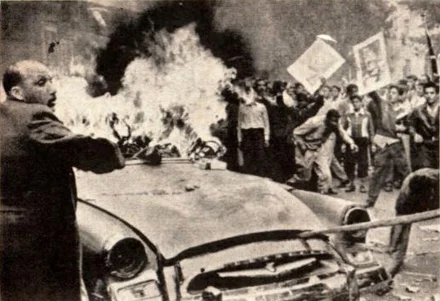
    • In February 1961 protests broke out across the world — in Cairo, Belgrade and London among many cities — and in the UN Security Council gallery in New York.
    • Malcolm X called him ‘the greatest black man who ever walked the African continent’; he became a figure of the Black freedom movement in the United States.
    • His fate remains a reference in arguments about foreign intervention, covert action and who controls Africa’s natural resources.
Protesters carrying portraits of Lumumba beside a burning car in Cairo, February 1961
Cairo, February 1961: protesters carry Lumumba’s portrait after news of his death.Associated Press · public domain (copyright not renewed)
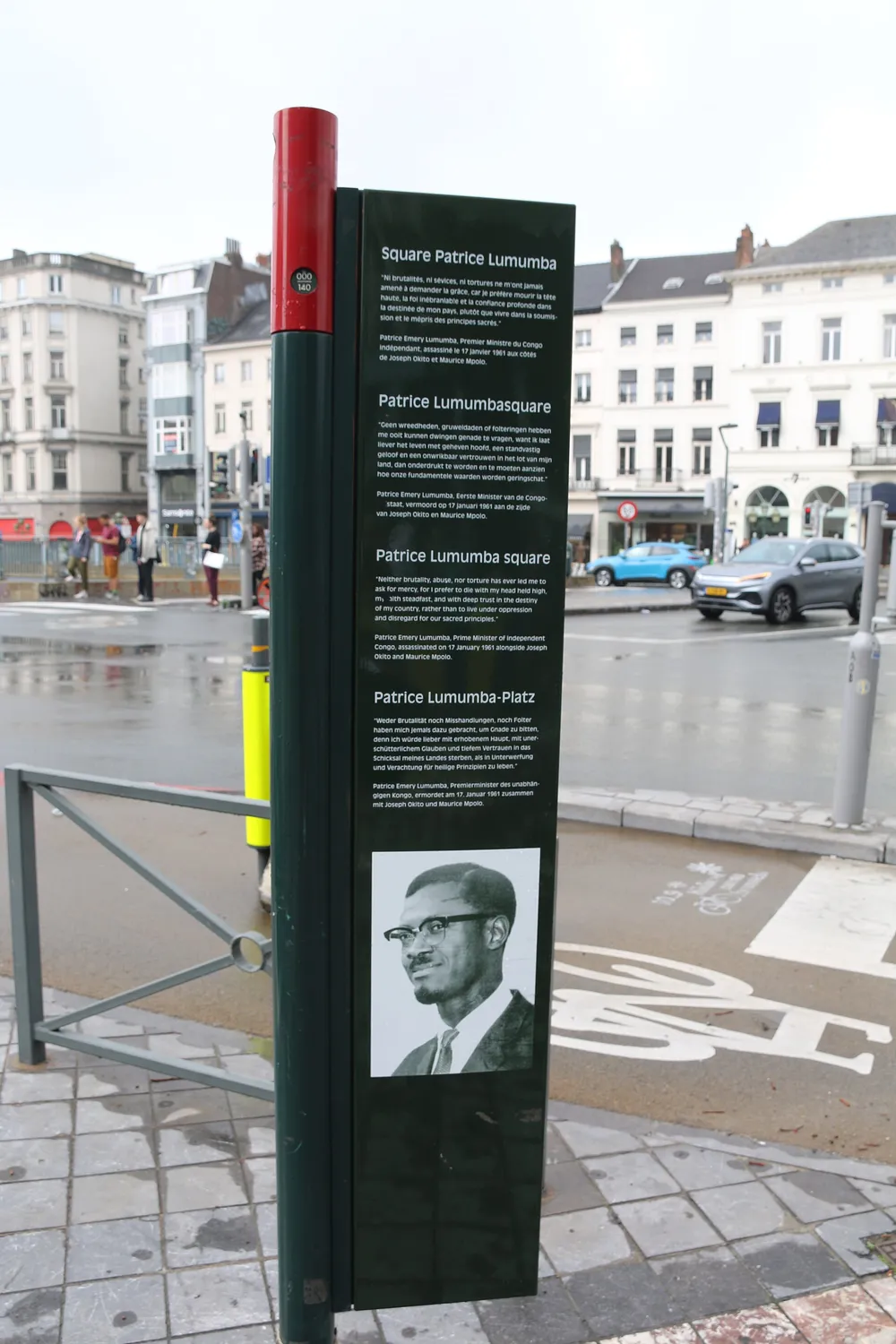
Information column at Square Patrice Lumumba in Brussels, with his portrait and a text panel
The information column at Square Patrice Lumumba, Brussels, 2023.FrDr · CC BY-SA 4.0

Remembrance

How he is remembered

  1. National hero

    In 1966 — six years after independence — Mobutu, who had played a decisive part in his downfall, proclaimed Lumumba a national hero.

  2. Kinshasa

    A monumental statue stands at the Échangeur de Limete, near the mausoleum where his tooth was laid in 2022. Boulevard Lumumba crosses the capital.

  3. Streets and institutions

    Streets and squares bear his name from Dar es Salaam and Kampala to Bamako, Charleroi, Tehran and Dresden; Moscow’s Peoples’ Friendship University carried his name from 1961 to 1992 and again from 2023.

  4. Square Patrice Lumumba, Brussels

    Inaugurated on 30 June 2018 beside the Matonge quarter, after years of campaigning by the Congolese diaspora, a few steps from the heart of the capital that once ruled the Congo.

  5. Literature, music and art

    Aimé Césaire’s play Une saison au Congo (1966); Sartre’s essay on his political thought; the 1960 rumba Indépendance Cha Cha, which names him; and the painted history of the Congolese artist Tshibumba Kanda Matulu.

  6. The return of 2022

    The return and burial of his tooth turned a private grief into a national ceremony, sixty-one years after his death.

In the Democratic Republic of the Congo his portrait hangs in homes and offices, and politicians of every camp claim his name. Across Africa he stands with Nkrumah, Cabral and Biko among the founders of the continent’s modern political memory — remembered less for what he was able to do than for what he refused to accept.

Chapter VIII · The voice of Lumumba

In his own words

Every quotation here is traced to a dated speech or letter, with the original French where he wrote or spoke in French. Phrases that circulate online without a source are left out.

  • 30 June 1960

    Independence speech, Léopoldville — answering King Baudouin’s tribute to Leopold II.

    « Nul Congolais digne de ce nom ne pourra jamais oublier cependant que c’est par la lutte qu’elle a été conquise. »

    No Congolese will ever forget that independence was won in struggle.

    English: The Truth about a Monstrous Crime of the Colonialists (Moscow, 1961) · source text
  • 30 June 1960

    Independence speech — the programme for a free Congo.

    « Nous allons montrer au monde ce que peut faire l’homme noir quand il travaille dans la liberté, et nous allons faire du Congo le centre du rayonnement de l’Afrique tout entière. »

    We shall show the world what the black man can do when he works in freedom, and we shall make the Congo the centre from which light shines across the whole of Africa.

    Translation: this site (the 1961 Moscow edition renders the last clause ‘the pride of Africa’) · source text
  • 30 June 1960

    Independence speech — on Pan-African liberation.

    “The Congo’s independence is a decisive step towards the liberation of the whole African continent.”

    English: The Truth about a Monstrous Crime of the Colonialists (Moscow, 1961) · source text
  • 20 February 1960

    Closing session of the Round Table conference, Brussels, speaking for the MNC.

    “We demanded the immediate and unconditional independence of our country. We have just won it.”

    The Belgo-Congolese Round Table Conference (Brussels, 1960) · source text
  • Late 1960 — January 1961

    Letter to his wife, Pauline, from Thysville prison.

    « Sans dignité il n’y a pas de liberté, sans justice il n’y a pas de dignité, et sans indépendance il n’y a pas d’hommes libres. »

    Without dignity there is no freedom, without justice there is no dignity and without independence there are no free men.

    English: The Truth about a Monstrous Crime of the Colonialists (Moscow, 1961) · source text
  • Late 1960 — January 1961

    Letter to Pauline Lumumba, Thysville — his final message.

    « L’histoire dira un jour son mot, mais ce ne sera pas l’histoire qu’on enseignera à Bruxelles, Paris, Washington ou aux Nations unies, mais celle qu’on enseignera dans les pays affranchis du colonialisme et de ses fantoches. L’Afrique écrira sa propre histoire et elle sera, au nord et au sud du Sahara, une histoire de gloire et de dignité. »

    The day will come when history will speak. But it will not be the history which will be taught in Brussels, Paris, Washington or the United Nations. It will be the history which will be taught in the countries which have won freedom from colonialism and its puppets. Africa will write its own history and in both north and south it will be a history of glory and dignity.

    English: The Truth about a Monstrous Crime of the Colonialists (Moscow, 1961) · source text

Chapter IX · Archives and research

For students,
journalists, historians

Primary sources first: the photographs, the speeches, the inquiries and the institutions that hold the record.

Select any photograph to view it full size with its credit and source. Every image on this site is in the public domain or under an open licence.

Photograph collection

Speeches, letters and official documents

The United Nations

Archives, museums and libraries

Research and images

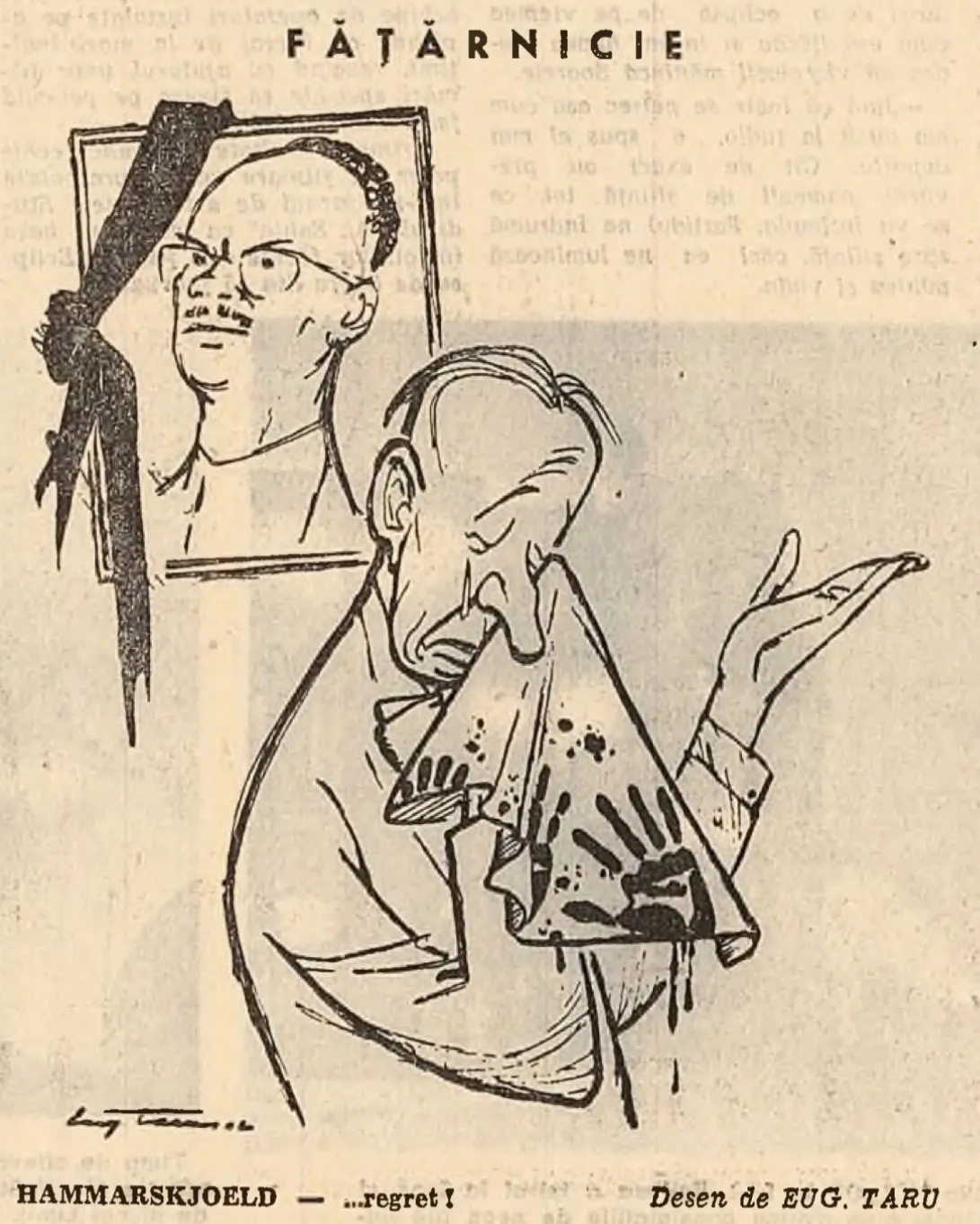
Front-page cartoon in Scînteia: Dag Hammarskjöld weeping beneath a portrait of Lumumba, captioned ‘Hypocrisy’
Newspaper coverage, 1960 — 1961The world’s press followed the Congo daily. In the Eastern bloc, as in much of Africa and Asia, Lumumba’s death was blamed on the West and on the UN: here the Romanian party daily Scînteia shows Secretary-General Hammarskjöld shedding crocodile tears, 16 February 1961. Digitised newspaper collections such as Gallica and national libraries hold the coverage on every side.Eugen Taru / Scînteia · public domain